
In the first year of our marriage, my wife and I lived in a small, old brick house that had been haphazardly split into two apartments. The guy in the other apartment, a recent college graduate, had moved to Utah that summer from San Diego where he had lived his entire life. In the first week of January, that neighbor knocked on our door, curious as to why his gas bill for December was $220. The root of the issue was quickly found out – he had set the thermostat of his old, drafty brick apartment to 75 degrees. He agreed that this was a ridiculous setting, but, in his own words, that was the only way he could be comfortable. I kindly informed him that his days of walking around in shorts without a care in the world were over. If he wanted to be warm, he had to work for it.
If there is anything American’s love, it’s being comfortable. We crave comfort all the time, and we don’t want to have to lift a finger to make that happen. To this end, we have developed a litany of energy-hungry technologies with the single purpose of keeping our bodies cushioned in a pocket of air at exactly 72 degrees F. In the rare case when you begin to feel the small tinglings of discomfort, you just dance over to the magical white box on your wall and happily change the temperature up or down a few degrees with the push of a button. Within minutes, the air around you has been magically, invisibly transformed and you are hardly even aware of the raging snow storm outside


But, of course, the air isn’t really magically transformed – it takes a significant amount of energy to change the temperature of anything, especially a 2,000 square foot house and all of its contents. And, when a country of 325 million people living in giant homes and working in spacious office buildings demands perfect thermal comfort 24/7, all of that energy begins to add up. In 2009, 41.5% of all energy used in the average American home was for heating and cooling [1], and the total energy use for air conditioning is expected to rise with the influence of climate change. Buildings in the United States contributed 40% of the total carbon emissions from the United States in the first half of 2018, and this number is likewise expected to grow. By themselves, the buildings of the United States contribute more carbon dioxide to the atmosphere than the total carbon dioxide emissions from any other country in the world (besides China) [2].
If you ask me, that’s not even the worst of it. By continuously automating every single thermal environment we encounter, we have created a people who are incapable of adapting personally to temperature changes. For many, the thermostat is the dictator of thermal comfort. Nothing else can be done to change how you are currently feeling.
I’m writing today’s post because I am concerned. I’m worried about how much energy we are using to heat and cool our bodies and possessions, but I’m also worried about what we are doing to ourselves – about what we are forgetting. As it turns out, you are the only dictator of your thermal comfort, and the number of energy-efficient tools that you have to control how comfortable you are is vast. Down with the thermostat!
In the past, if you wanted to be warmer, you put on more clothes. If you wanted to be cooler, you took off those clothes. If you were still too hot, you fanned yourself with a fan powered by your own arm. If you were still too hot, you just went to sleep (the Spanish siesta isn’t about being lazy – it’s about escaping the extraordinary heat of Spain at 1 PM [3]). In the past, sitting on the porch watching the sunset in the summer time was probably more about staying outside while the outside air was relatively cooler than the air inside your stuffy, overheated home. You avoided cooking with a hot stove when it was hot and cooked often when it was cold. Homes were built with walls that were thick and windows that actually opened to provide methods for temperature control that didn’t require natural gas or electricity.
In a nut-shell, the pre-thermostat world often used passive methods to stay comfortable. In this case, passive simply means a method, technology, or technique that doesn’t use an artificial energy source such as electricity, gasoline, natural gas, or coal. Our ancestors built their homes and their lives with the temperature of the Earth in mind, but modern construction and lifestyles aren’t nearly as conducive. It used to be that people never went to the movies in the summer time because it was so danged hot in that cramped room with a giant, hot projector bulb (not to mention Gretta Garbo! Sizzling!). Today, the biggest movies come out during summertime. The walls of our modern homes are well insulated but still lack mass – even if our windows can open, they hardly ever are.

Of course, people of the past still used energy to stay comfortable. No matter how well insulated, a cabin in the woods still wasn’t livable without a wood-burning stove. However, you would probably think twice about throwing another log on the fire if you were the one who had to cut the tree, saw the logs, and break apart the kindling. You would probably think extra hard about it if the wood pile was looking small and the winter was still young. Instead, snuggling with a loved one under a blanket, putting on an extra sweater, patching up the holes in the wall, baking an extra-big pie, or cutting firewood (“cut wood warms you twice”) probably did the trick just fine.
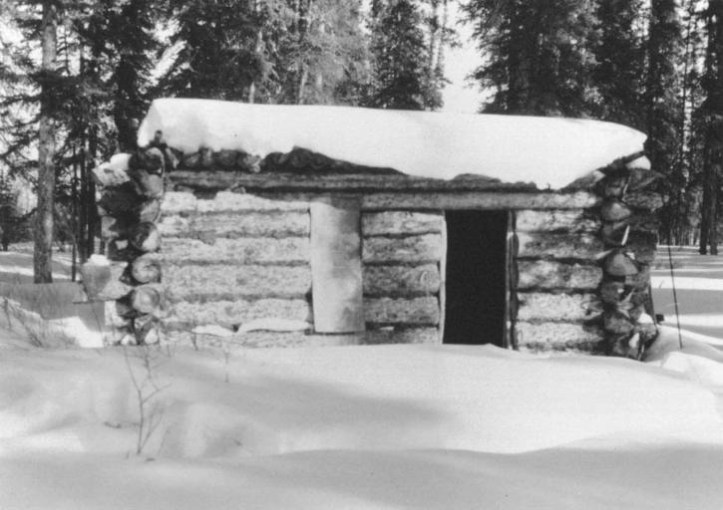
But what are we supposed to do today? The die is cast. Homes are not built for passive control, but instead are optimized for heating and air conditioning. You should probably just buy a more efficient air conditioner, a high-tech heater, and a smart thermostat and then forget about the whole issue.
Honestly, that’s not a bad idea. Despite all of my praise of the old way of life, the way we do things now has it’s benefits. Specifically, the heating energy use per person per household in the 1990 was the same as in 1900 [4]. So, yes, buy more efficient machines. As I’ve said in almost every post, “whatever you do, do it efficiently.” BUT, there are still many things you can do to passively maintain your comfort level. And, as the world’s population and the size of our homes continues to grow, we are going to have to start doing more than just buying a furnace that is 3% more efficient. To this end, I have provided a list of passive or lower-energy methods and technologies you can use to stay (mostly) comfortable. The list is at the end of the post, though, because I don’t want to interrupt the short, conclusive rant I am about to go on….
It is okay to be cold. It is okay to be hot. It is a part of life. If we really want to save energy on heating and cooling then we are going to need more than just efficient furnaces, smart thermostats, and passive methods – we are going to need grit. We are going to need people who can take a change in temperature and celebrate it, who play outside even though it’s only 50 degrees, and who aren’t afraid to feel uncomfortable.
To feel temperature is to be alive, and temperature, like life, is full of changes. No, you don’t need to sit in 110 degree weather in July. That would prove nothing, and would probably kill you eventually. But, do you really need to sit in exactly 72 degrees all summer long?
Passive and Low-Energy Methods for Thermal Comfort
1) INSULATE: THIS IS THE MOST IMPORTANT ONE! Heat doesn’t always move easily. Certain materials and geometries slow the transfer of heat. Use these things to insulate both your body and your living space, or remove insulation if you are too hot. If you are cold, get under a blanket, put on a sweater, wear long pants, put on socks (bonus points for wool socks). Upgrading your home’s insulation is essential. It is low cost and could save you 10-30% on your heating bill [5] and would save you money on your cooling bill because it prevents heat from moving in or out of your home. So, if you have money to spend on upgrades, forget the more efficient furnace and upgrade your insulation, block any holes to the outside and get more efficient windows. These technologies don’t use any energy and can save you some significant cash.
2) Get the air moving: Heat transfer is very complicated. The temperature of the air around you is only one of many variables that determines how much heat is currently being removed from your body, which is what this is all about. When your body is not shedding enough heat, you feel hot. When your body is shedding too much heat, you feel cold. By moving the air around you, heat is removed more effectively, and you feel like you are in a colder room. Sitting in a room with a ceiling fan running makes the room feel about 4 degrees cooler [6] and the effect is better the faster the air is moving.
But there are some caveats. First, it’s very important to remember that fans do not cool the air, they cool you. As such, a fan running by itself in a room is like a lightbulb left on in an empty room – just a waste of energy. Furthermore, fans don’t matter if you don’t change your thermostat to accommodate. A study from the 90’s found that people didn’t change their thermostat setting once they started using a fan, meaning that their home still used the same amount of energy and a little bit more to power the fan [7].
3) Use nature’s energy sources: I once had a neighbor (a different neighbor) who would run his air conditioner literally throughout the whole entire night. I’m talking eight hours of straight air conditioning! In Utah during the month of June! What really gets me, though, is that it was probably as cool outside as he wanted it to be in his house. All he had to do was open at least two windows in his house (to provide air flow) and that air would have cooled him naturally AND made his house smell like my rose bushes. Even better, put a fan in your window and point it so it is blowing outwards. The fan will draw cool air in through one open window and blow hot air out of the other.
Of course, this only works if the air outside is cooler than the air inside of your home. In a place like Utah the temperature drops quite drastically at night, which means that opening your windows is actually a good idea. However, there are many places in the United States where the temperature either does not drop at night or the humidity is too high. In these cases, keep those windows shut.
4) Dynamic Shading: During the summer, you don’t want the sun to shine on your house. During the winter, you do want it to shine on your house. So, what you need is some fancy device that provides shade in the summer time but not in the winter time. Something like a tree, for example. A recent study predicts a well-placed shade tree would save you $20 a month on cooling bills [8].
5) Change the Temperature in Your Home: By moving your thermostat one degree closer to the outside temperature, you save one percent on your heating or cooling bill [10]. In this day and age, our homes are empty for longer periods of time than ever, but they are more consistently heated and cooled. There was a rumour going around once that turning up or down your thermostat doesn’t actually save any energy because you then have to “re-heat” or “re-cool” the things inside of your home. This isn’t true, as explained here [9]. I wanted to explain why in great detail, but I don’t have room.
A note about smart thermostats: I’m not a huge fan for one reason – they make for dumb consumers. If we are going to capitalize on passive methods to maintain the temperature of our homes then we need to be constantly vigilant. So, a device intended to remove you even further from controlling your households daily energy usage is not a great idea. Ditch the technology and turn yourself into the smart thermostat. Turn down the heat yourself when you go to bed, turn it off when you go away, etc. Of course, this means that you won’t be able to turn on your heater remotely while driving home, but does that really matter? I will refer you to my above discussion about grit.
6) Buy a smaller house: Since 1973, the average American home has doubled in size. During that same time period, the average number of people per house has decreased from 3 to 2.5 [10]. Likewise, only 17% of new homes in the 1970’s had ceilings over eight feet. Today, that number is 52% [11]. So, we have houses that are both wider and taller but with less people in them. It is probably common sense, but let me state this for the record; it takes more energy to heat and cool a larger home. In fact, to size a heater for your home all you have to do is multiply your square footage by 25 to get the BTU’s your heater needs to put out (and then add 25% if your ceilings are over 8 feet) [12]. So, we have doubled the heating load per person simply by doubling the size of our homes.

 Joule Thieves